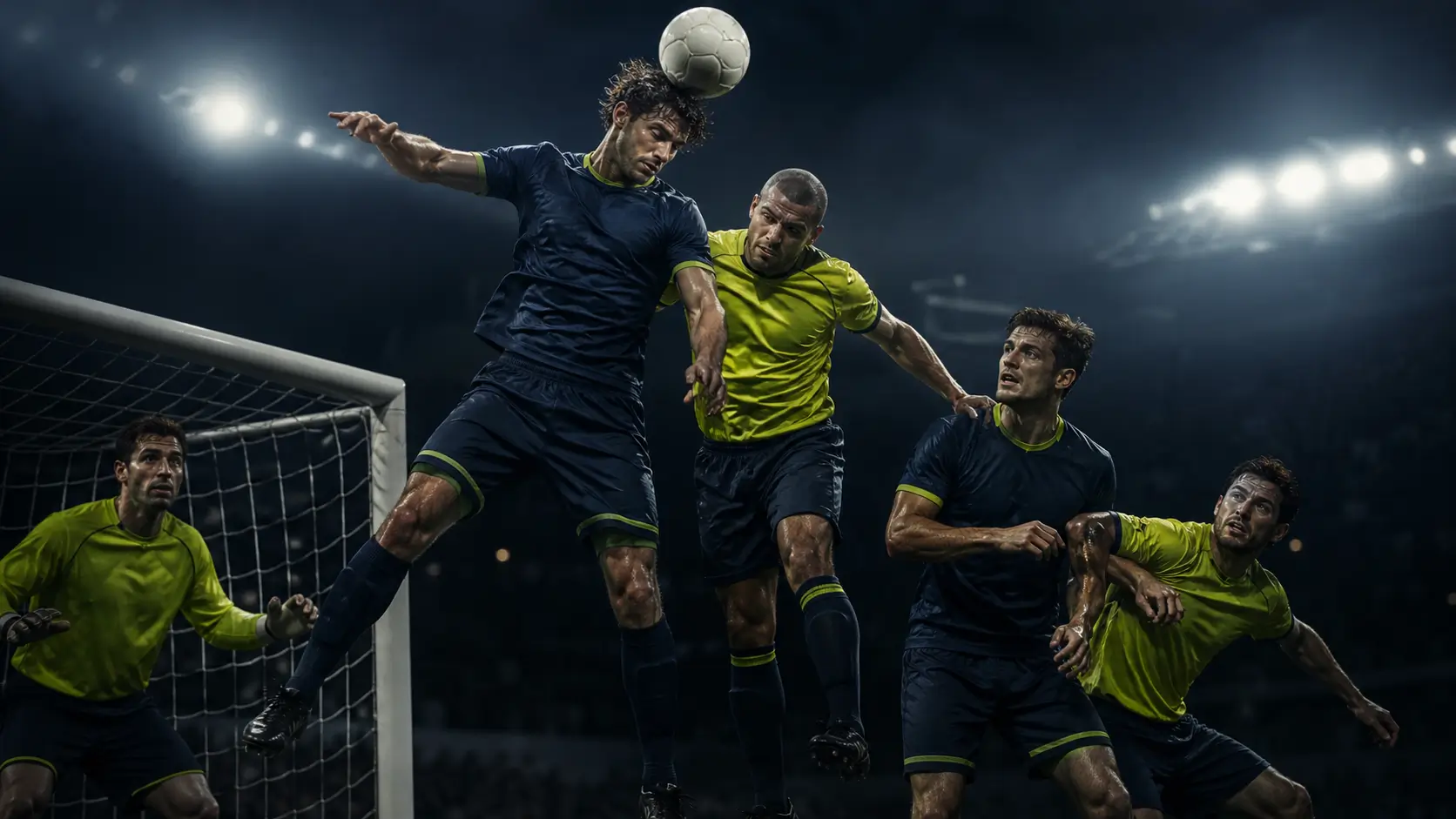
Franz Beckenbauer ranks as FootballerRank’s best centre-back of all time. His defending, passing and control from the libero role put him first. Franco Baresi follows for organising Milan’s defensive line, with Bobby Moore third for his anticipation, composure and captaincy of England’s 1966 World Cup-winning team.
This Top 10 compares players with substantial elite evidence in central defence, including centre-backs, sweepers and liberos. We assess their peak, defensive ability, major matches, organisation and longevity in the role. Full-back performances provide career context but receive less weight here. That distinction matters for Maldini, Ramos and Puyol, who played more than one defensive position.
Editorial ranking | Reviewed 2026
Key Takeaways
- Beckenbauer leads for combining central defending with exceptional playmaking and major honours.
- Baresi ranks second, followed by Moore, Maldini and Ramos.
- Historical sweepers and liberos qualify when central defence was their main responsibility.
- Maldini’s centre-back years receive full weight; his earlier left-back career provides context.
- Ramos won the 2010 World Cup as a right-back. His Euro 2012 performances provide direct centre-back evidence.
- The order is an editorial judgment. Goals, tackles and team trophies cannot settle it on their own.
Top 10 Best Centre Backs of All Time
| Rank | Player | Country | Central Defensive Style |
| 1 | Franz Beckenbauer | West Germany | Libero / Ball-playing centre-back |
| 2 | Franco Baresi | Italy | Defensive organiser / Sweeper |
| 3 | Bobby Moore | England | Intelligent ball-playing centre-back |
| 4 | Paolo Maldini | Italy | Complete centre-back |
| 5 | Sergio Ramos | Spain | Aggressive goalscoring centre-back |
| 6 | Gaetano Scirea | Italy | Elegant libero |
| 7 | Fabio Cannavaro | Italy | Anticipating centre-back |
| 8 | Alessandro Nesta | Italy | Complete conventional centre-back |
| 9 | Daniel Passarella | Argentina | Aggressive goalscoring centre-back |
| 10 | Carles Puyol | Spain | Physical defensive leader |
The ranking compares complete central-defensive careers rather than current form. It is not an official FIFA or UEFA list. The main roles in the table describe how the players defended; they do not mean that every appearance in their careers came in the same position.
What Counts as a Centre Back?
A centre-back protects the central area in front of the goalkeeper. The role includes marking forwards, tracking runs, defending crosses, covering teammates and organising the line. Passing from deep also matters because a defender’s first decision after winning the ball can start an attack or return pressure to his team.
Traditional stoppers often marked a striker closely. Sweepers usually covered behind or around the main line, while a libero could step forward into possession. Beckenbauer and Scirea qualify because central defending remained a main responsibility during their defining years. A player is not excluded because his era used a different name for the role.
Modern centre-backs may receive under pressure, carry into midfield and defend large spaces behind a high line. Historical defenders faced different offside rules, pitches, pressing systems and passing demands. We judge how well each performed his own task before comparing the quality of that work across generations.
How We Ranked the Greatest Centre Backs?
Six factors guide our assessment. Their weights describe editorial priorities, not a calculated player score. Peak and defensive quality carry the most weight, while major-match evidence, longevity, organisation and influence help separate closely matched players.
| Ranking Factor | Weight | What We Considered |
| Peak centre-back level | 25% | How dominant the defender was centrally at his best |
| Defensive ability | 20% | Positioning, tackling, marking, anticipation and aerial play |
| Major-match impact | 20% | World Cups, EUROs, European Cups and major finals |
| Longevity at centre-back | 15% | Length of elite central-defensive performance |
| Organisation and buildup | 10% | Leadership, passing, carrying and control of the defensive line |
| Trophies and influence | 10% | Major honours and impact on the position |
Major-match credit depends on the player’s role and contribution. A World Cup medal earned without playing is different from captaining a side throughout its winning run. A trophy won at full-back supports a player’s broader career but does not become centre-back evidence simply because he later changed positions.
Tackle totals need similar care. A defender can close a passing lane before a striker receives the ball, so no tackle is needed. A high tackle count may reflect repeated pressure rather than better defending. Historical players also lack the detailed tracking available today. We therefore use recorded achievements alongside tactical analysis, with the final order remaining open to debate.
1 Franz Beckenbauer
Country: West Germany
Main club: Bayern Munich
Role assessed: Libero and sweeper
Beckenbauer leads because he could defend centrally and then become a playmaker. He read danger early, recovered possession and carried the ball beyond the first line of pressure. That movement gave Bayern and West Germany another passing option without removing his responsibility to protect the defence.
His libero role was different from a modern centre-back partnership. He had more freedom to move forward, but had to choose the right moment and retain control of the space behind him. Composure, passing and awareness made those decisions reliable. He helped develop the attacking use of the libero, rather than inventing central defensive cover from nothing.
Bayern won three consecutive European Cups in 1974, 1975 and 1976 during his captaincy. He also captained West Germany to Euro 1972 and the 1974 World Cup. DFB and Bayern records support those achievements and his Ballon d’Or wins in 1972 and 1976. His coaching career adds no playing credit to this ranking.
Why he ranks No. 1: Beckenbauer combines a long central-defensive peak with passing, carrying, leadership and major success for club and country. Baresi challenges him closely for pure defending, but Beckenbauer’s greater influence on possession gives him first place.
2 Franco Baresi
Country: Italy
Main club: AC Milan
Role assessed: Sweeper and centre-back
Baresi’s main strength was controlling space. He anticipated the next pass, stepped forward at the right moment and kept Milan’s defenders working together. His size mattered less than his positioning and decisions. Under Arrigo Sacchi, the timing of a higher defensive line made those qualities especially valuable.
He also passed well and could move possession out of defence. Calling him a pure defensive organiser does not mean he offered little on the ball. It means that organisation, line control and anticipation provide the strongest reasons for his high position.
Milan records 719 official appearances, six Serie A titles and three European Cups. He captained the club for 15 seasons. Baresi was in Italy’s 1982 World Cup-winning squad but did not play a minute. His stronger individual tournament evidence came in later editions, especially the 1994 final.
After knee surgery during the 1994 tournament, he returned for the final against Brazil and helped Italy hold a goalless score through 120 minutes. Italy lost on penalties. His own missed kick should not erase the defensive performance, while his 1982 medal should not be treated as a leading on-field contribution.
Why he ranks No. 2: Baresi combined outstanding anticipation and organisation with two decades at Milan. He comes closest to Beckenbauer when stopping attacks receives more weight than moving the ball forward.
3 Bobby Moore
Country: England
Main club: West Ham United
Role assessed: Centre-back
Moore ranks third for anticipation, clean tackling and calm distribution. He often positioned himself before an attacker could exploit open space. That ability reduced how often he needed a desperate recovery challenge. His style showed why reading the game can be as valuable as speed or physical aggression.
His defining achievement was captaining England to the 1966 World Cup. In the 4–2 final win against West Germany, his quickly taken free kick created Geoff Hurst’s first goal. Moore’s forward pass also supplied Hurst for England’s fourth. His influence in the final therefore included starting attacks as well as defending.
FIFA’s account of his career also highlights the 1970 meeting with Brazil as a major example of his quality. Moore did not build the same European Cup record as Beckenbauer or Baresi. His international peak, consistent defensive decisions and leadership give him the edge over the players below him in our assessment.
Why he ranks No. 3: Moore combined anticipation, controlled tackling, passing and World Cup-winning captaincy. His ranking rests on his central-defensive performance rather than a large collection of club trophies.
4 Paolo Maldini
Country: Italy
Main club: AC Milan
Role assessed: Centre-back years, with left-back context
Maldini qualifies because he produced a substantial elite career in central defence after establishing himself at left-back. His positioning, balance and patience transferred well between the roles. He could delay an attacker, protect the passing route and choose when to challenge without committing too early.
His partnership with Nesta gives direct evidence for this specialist ranking. UEFA’s users selected them together at centre-back in the 2003 Team of the Year after Milan won the Champions League. That is recognition of their central roles, although the selection itself was a fan vote rather than a measured defensive score.
Milan confirms 902 official appearances across 25 years. That is a complete club total covering several positions, not 902 centre-back appearances. His five European Cup or Champions League titles also span different roles. The later central-defensive years, including the 2003 and 2007 title runs, carry the strongest specialist weight here.
Why he ranks No. 4: Maldini’s centre-back years alone offer exceptional positioning, one-on-one control and leadership. His complete defensive career could rank higher in a broader list that gives equal weight to his left-back peak.
5 Sergio Ramos
Country: Spain
Main club: Real Madrid
Role assessed: Centre-back years, with right-back context
Ramos brought aerial strength, aggressive marking, recovery defending and a major set-piece threat. He could step out to challenge a forward and compete in large spaces. That approach created strong moments but also carried a discipline risk. We weigh those tradeoffs alongside his long-term success.
Real Madrid records 671 appearances, 101 goals and 22 trophies across his full spell. He won four Champions League titles and captained the team through three consecutive wins from 2016 to 2018. His stoppage-time header in the 2014 final forced extra time before Madrid beat Atlético 4–1.
His Spain honours require a position distinction. Ramos played right-back at Euro 2008 and the 2010 World Cup. UEFA and FIFA identify his move into central defence by Euro 2012, where he partnered Gerard Piqué. The 2012 title therefore gives direct central-defensive evidence; the earlier medals provide wider career context.
Why he ranks No. 5: Ramos combines a long centre-back peak with European success, leadership and decisive scoring. Maldini receives a narrow edge for our assessment of defensive control, while Ramos has the stronger attacking contribution.
6 Gaetano Scirea
Country: Italy
Main club: Juventus
Role assessed: Sweeper and libero
Scirea combined defensive cover with composed passing. He read the next threat, kept his position and helped Juventus build attacks after winning possession. He preferred anticipation to uncontrolled aggression. His style suited a libero who had to protect the back line and support possession in the same match.
Juventus confirms 552 appearances across 14 seasons and states that he was never sent off. Its records list seven league titles, one European Cup, one UEFA Cup and one Cup Winners’ Cup, alongside further major honours. That range shows sustained success through different competitions and tactical demands.
He also played a leading defensive role as Italy won the 1982 World Cup. Unlike Baresi’s unused squad medal in the same tournament, Scirea’s contribution came on the pitch. His passing supported Italy’s attacking moves without becoming the main reason to judge his defending.
Why he ranks No. 6: Scirea offers a strong balance of anticipation, organisation and playmaking, backed by a long Juventus career and active World Cup contribution. The players above him have slightly stronger combined cases under our priorities.
7 Fabio Cannavaro
Country: Italy
Main clubs: Parma, Juventus and Real Madrid
Role assessed: Centre-back
Cannavaro’s timing allowed him to compete against taller forwards. He attacked the ball early, judged aerial challenges well and used recovery speed when an attack broke through. His defending combined anticipation with more physical aggression than the calmer libero styles higher in the list.
His 2006 World Cup is one of our strongest examples of a centre-back tournament peak. Cannavaro captained Italy throughout its title run. FIFA records that the team conceded only twice, from an own goal and a penalty. That is a team achievement involving Buffon and the other defenders, supported by Cannavaro’s individual leadership.
He won the Ballon d’Or and FIFA World Player of the Year in 2006. Those annual awards are separate from the World Cup Golden Ball, which went to Zinedine Zidane; Cannavaro received the tournament’s Silver Ball. Keeping the awards distinct avoids overstating what he won.
Why he ranks No. 7: Cannavaro’s anticipation, aerial timing and World Cup-winning captaincy provide an exceptional peak. Scirea has the stronger combination of long-term club continuity and central-defensive influence across more successful campaigns.
8 Alessandro Nesta
Country: Italy
Main clubs: Lazio and AC Milan
Role assessed: Centre-back
Nesta has one of the strongest conventional defending cases in this Top 10. He combined balance, tackling technique and recovery with calm positioning. He could wait for an attacker to expose the ball, then challenge without needing to turn every duel into a physical contest.
He captained Lazio before joining Milan in 2002. Milan won the Champions League in 2003 and again in 2007. In the 2003 final, Nesta converted his shootout penalty against Juventus. His partnership with Maldini brought together two defenders who could read attacks and remain composed under pressure.
Nesta was a member of Italy’s 2006 World Cup-winning squad and played in the group stage. Injury then kept him out of the knockout rounds. He deserves credit for his earlier contribution, but that medal does not carry the same individual tournament weight as Cannavaro’s seven-match captaincy.
Why he ranks No. 8: Nesta’s tackling, positioning and recovery give him an exceptional specialist peak. Injuries reduced the continuity of his club and international evidence. A ranking focused almost entirely on pure defending could reasonably place him higher.
9 Daniel Passarella
Country: Argentina
Main clubs: River Plate, Fiorentina and Inter
Role assessed: Centre-back and sweeper
Passarella combined aggressive central defending with passing and a strong attacking threat. He challenged forwards firmly, organised the players around him and attacked crosses at both ends. His contribution should be assessed through those defensive qualities as well as his unusual scoring ability.
He captained Argentina to the 1978 World Cup, playing throughout the tournament. Argentina beat the Netherlands 3–1 after extra time in the final. FIFA’s history identifies him as the captain of that first title, with Diego Maradona taking the captaincy when Argentina won again in 1986.
Passarella belonged to the 1986 winning squad but did not appear in the tournament. His ranking therefore rests mainly on his 1978 leadership, central-defensive peak and club career, rather than treating two winner’s medals as two equally strong playing campaigns.
He later played in Serie A with Fiorentina and Inter, adding evidence outside Argentina. His passing and threat at set pieces strengthened his attacking contribution. His ranking still rests mainly on his defending and leadership. Scoring supports the comparison; it does not replace the assessment of his defending.
Why he ranks No. 9: Passarella combined central defending, leadership and attacking value with active World Cup-winning captaincy. His repeated European club success is less extensive than the players above him.
10 Carles Puyol
Country: Spain
Main club: Barcelona
Role assessed: Centre-back years, with right-back context
Puyol completes the list for leadership, aerial defending and his willingness to recover into open space. Barcelona often committed players forward, leaving its defenders to manage quick counter-attacks. Puyol’s concentration and readiness to cover teammates suited that responsibility.
Barcelona records 593 appearances, six league titles and three Champions League titles. Those complete club totals cover both central and wider defensive duties. His long partnership with Gerard Piqué provided substantial centre-back evidence, but individual matches still need to be assessed in the position he actually played.
His Spain career adds direct central-defensive success at Euro 2008 and the 2010 World Cup. Puyol scored the only goal against Germany in the World Cup semi-final before Spain beat the Netherlands in the final. That header was a decisive attacking contribution during a strong defensive tournament.
Why he ranks No. 10: Puyol combines a long elite club career with leadership and active international success. The players above him have stronger combined cases for individual peak, tactical influence or central-defensive longevity. Tenth place reflects the depth of this historical field.
Beckenbauer Baresi and Moore Compared
The top three offer different strengths. Beckenbauer has our strongest combined defending and playmaking case. Baresi leads our assessment of defensive organisation, while Moore stands out for anticipation and calm distribution. These descriptions are editorial judgments supported by their roles, rather than statistical skill grades.
| Measure | Beckenbauer | Baresi | Moore |
| Defining central role | Libero | Sweeper and line organiser | Centre-back |
| European Cups won as a player | 3 | 3 | 0 |
| World Cup winning contribution | Captain in 1974 | Unused squad member in 1982 | Captain in 1966 |
| Main ranking advantage | Defending plus playmaking | Organisation and anticipation | Reading attacks and composure |
Winning-campaign counts are not counts of finals played. Baresi missed Milan’s 1994 European final through suspension but contributed to that campaign. Moore’s lower club trophy total does not erase his international peak. The table provides context for the order rather than a formula that produces it.
Why Some Ranking Decisions Are Close?
Maldini places fourth because this list gives full credit to his centre-back evidence. His earlier left-back peak strengthens his broader defensive reputation. Ramos’ later central years are similarly distinct from his early right-back achievements. Puyol also switched positions, so total club appearances are never treated as exact centre-back totals.
For Maldini’s specialist work on the left side, see our best left backs of all time.
Nesta could rise under a system that values peak tackling and one-on-one defending above availability. Cannavaro could rise if a single World Cup peak received more weight. Baresi could take first if organising and stopping attacks outweighed Beckenbauer’s possession influence. Our stated priorities explain those choices without claiming that small differences are objectively measurable.
For a ranking that compares central and wide defenders together, see our best defenders of all time.
Which Centre Backs Added the Most Attacking Value?
Ramos and Passarella have strong scoring cases within this selected Top 10. Ramos’ 101 Real Madrid goals include contributions from different positions and set pieces, so they are a complete club figure. His 2014 Champions League final equaliser shows why the timing of a goal can matter as much as the total.
Ronald Koeman is a major candidate outside the list because of his passing and scoring from central defence. Leaving him outside a defence-led ranking does not make Ramos or Passarella the highest-scoring centre-back in all football history. A goalscoring ranking asks a different question and needs consistent match-counting rules.
Who Just Missed the Top 10?
Koeman, Marcel Desailly and Matthias Sammer were strong candidates. Koeman offers unusual attacking output. Desailly combined central defence with elite defensive midfield work, while Sammer’s libero peak brought the 1996 Ballon d’Or. Their different roles and peak lengths make the final places open to debate.
Jürgen Kohler, Jaap Stam, Nemanja Vidić and Alessandro Costacurta also have serious specialist cases. Kohler and Stam are strong man-marking candidates. Vidić brought aerial strength and leadership, while Costacurta offers a long Milan career alongside several players already selected.
Elías Figueroa, José Santamaría, Laurent Blanc, Lilian Thuram, Armando Picchi, Billy Wright, Lúcio and Thiago Silva broaden the discussion across countries and eras. An all-time list should consider central-defensive quality beyond European trophy totals. Their absence reflects our final editorial choice, rather than a rule excluding a nationality or league.
Frequently Asked Questions
Who is the greatest centre back of all time?
Beckenbauer ranks first in FootballerRank’s assessment for combining central defending, playmaking, leadership and major club and international success. Baresi provides our closest challenge for pure defensive organisation.
Do sweepers and liberos count as centre backs?
Yes, when central defence was a main responsibility during their elite years. Beckenbauer and Scirea qualify under that rule. A historical tactical label does not exclude a player who performed central defensive duties.
Why is Paolo Maldini fourth?
This ranking gives full weight to Maldini’s substantial centre-back years. His earlier left-back peak provides context. His ranking can differ in an article that compares his complete career across all defensive positions.
Who had the best World Cup centre back peak?
Cannavaro’s 2006 campaign has our strongest pure centre-back tournament case. Moore in 1966, Beckenbauer in 1974 and Passarella in 1978 also combined leading central roles with winning captaincy.
Can goals or trophies decide the best centre back?
No. Goals add attacking value, while trophies show team success. A specialist ranking also needs positioning, marking, aerial play, organisation, availability and the player’s actual contribution in central defence.
Sources and Fact Checking
FIFA’s tournament histories support the World Cup roles and team outcomes. UEFA supports European competition records, annual awards, Ramos’ positional change and the 2003 users’ Team of the Year. Bayern and DFB support Beckenbauer’s honours. AC Milan, Real Madrid, Juventus and Barcelona support the identified complete club records.
We distinguish total club appearances from centre-back appearances, active tournament contributions from unused squad medals, and annual awards from World Cup awards. Historical goals, tackles and tracking records have uneven coverage. The evidence supports the achievements and roles described here; the ranking order remains FootballerRank’s editorial assessment.
Conclusion
In short, Beckenbauer leads our best centre backs of all time ranking for combining central defending with playmaking and major success. Baresi follows for organisation, with Moore third for anticipation and World Cup leadership. Maldini, Ramos, Scirea, Cannavaro, Nesta, Passarella and Puyol complete a Top 10 built around their actual central-defensive work. Position changes, injury-limited tournaments and unused medals explain why complete career totals cannot settle every place. The stated criteria make the order clear while leaving room for reasonable debate.